AOD-9604: the unsuccessful weight-loss candidate
The design aimed to separate growth hormone’s fat effects from its growth effects. The disappointing human result makes this an unusually revealing file.
The human obesity program
AOD-9604 reached human trials. That fact tends to disappear between enthusiastic descriptions of mouse fat loss and the much looser phrase “research peptide.” The published safety account covers about 900 adults with obesity across roughly six trials. Exposure lasted from 7 days to 24 weeks, and the side-effect profile resembled placebo. The expected useful weight loss was never established.
I give that unsuccessful result considerable weight. A compound can be tolerable over the period studied while offering too little benefit to justify the hopes attached to it. The obesity development program was discontinued, and AOD-9604 has no medicine approval. The longest human tests here still leave longer-term and rare harms unsettled.
The oral route also matters to the history: these were trials of a candidate intended to work by mouth. They provide no basis for inventing a human injection plan.
AOD-9604’s original design
The starting idea was to take a small region near the end of human growth hormone and retain its fat-metabolism effects without the growth-promoting actions of the whole hormone. AOD-9604 has 16 amino acids. The resulting substance differs from whole growth hormone and does not prompt the body to release more of it.
The animal fat-metabolism experiments supplied reasons to pursue the fragment. The economy of the proposal is appealing: separate an interesting action from a hormone with several other jobs, then test whether the smaller molecule is useful. The trouble comes when the elegance of the proposal becomes a substitute for the human outcome.
The animal safety and metabolism work found no major toxicological or DNA-damage concern in the tested rats and primates. In pigs, the amount in blood fell by half about three minutes after intravenous delivery, as amino acids were removed in sequence. That rapid breakdown describes an animal experiment; human subcutaneous pharmacokinetics remain uncharacterized in this evidence.
Mouse fat metabolism
The mouse work has a more interesting wrinkle than “fat burning.” One study found increased fat oxidation and lower weight in obese mice. Another tested mice lacking beta-3 adrenergic receptors, proteins involved in signals to fat cells. In those mice, the lasting weight and fat response disappeared while acute increases in fat oxidation and energy expenditure persisted.
So even within the animal experiments, a brief change in fuel use and a sustained change in body weight could come apart. I rate the deleted-receptor experiment above its usual promotional summary. The eventual human disappointment adds another reason to resist treating a metabolic mechanism as a completed treatment result.
The rabbit cartilage study
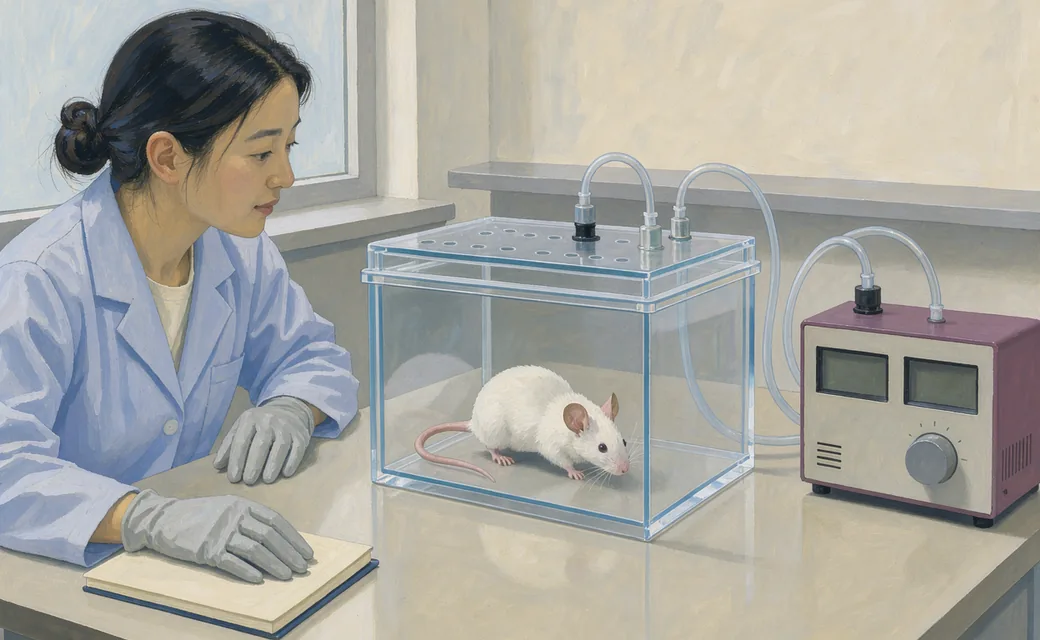
The file takes a turn toward joints. In 32 rabbits with experimentally induced knee osteoarthritis, AOD-9604 reduced cartilage-degeneration scores compared with saline. Some groups also received hyaluronic acid, a component that helps joint fluid remain slippery. The findings concern rabbit cartilage, with no human arthritis benefit established.
A failed obesity candidate taking a different direction seems reasonable to me. A new purpose needs its own clinical case. Rabbit knees cannot repair the missing human weight-loss result, and the weight-loss trials cannot establish treatment for a human knee.
AOD-9604 tolerability
Community accounts of AOD-9604 describe few daily complaints, little or no fat loss, occasional appetite or energy changes and irritation at an injection site. These are anecdotal accounts, outside controlled trials, and they supply no clinical evidence of benefit. Simultaneous changes in eating and exercise make attribution especially difficult. Claims of localized fat loss have no supporting human trial here.
The recurring disappointment is consistent with the failed clinical ambition, but anecdotes still cannot quantify efficacy or safety. I rank the human trial above enthusiastic and dismissive stories alike.
AOD-9604 remains unapproved for human treatment. The sport rules covered by this research prohibit it as a growth-hormone fragment; current competition rules require a separate check with the relevant authority. Product identity, purity and sterility are further unresolved concerns outside the controlled trials. Neither this file nor the animal experiments supplies a safe human treatment regimen.